
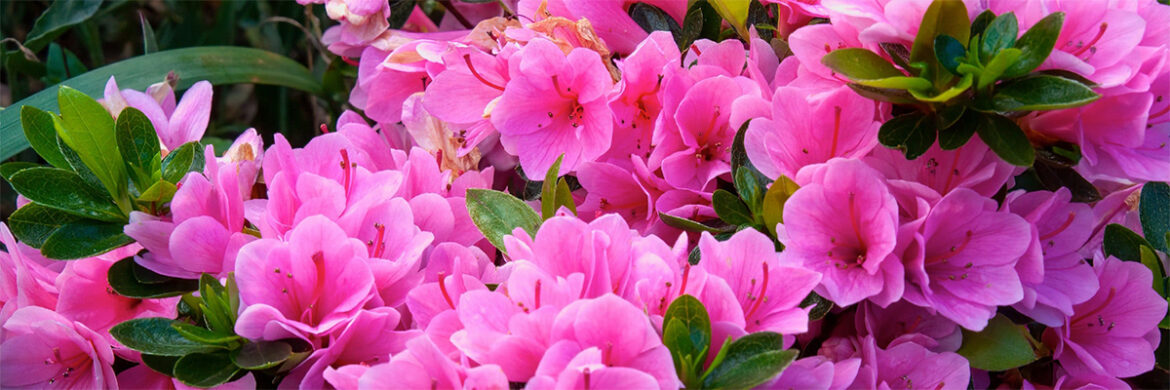
Believe it or not, December is an ideal time to plant azaleas in South Mississippi because of our mild winter weather. The fine, delicate foliage of azaleas contrasts nicely with other flowers and plants in your garden.
Fall and winter planting gives these plants several months to build a strong root system before the next growing season. Cooler temperatures reduce transplant shock. These beauties prefer rich, moist, acidic soil.
Native azaleas originated in the United States, while most evergreen azaleas generally have ties to Asia. All native North American azaleas are deciduous, which means they drop their leaves every autumn/winter.
Native azaleas almost resemble honeysuckle and look like small trees instead of shrubs.
However, most common landscape azaleas planted across the American South are evergreen shrubs imported from Asia that keep their leaves year-round, making them fundamentally different from deciduous types.
Taking care to choose the right azaleas will ensure a beautiful bounty of flowers in the spring. Check your local nurseries and garden centers for more information.
Deciduous azaleas can produce vibrant fall colors like yellows, reds, and oranges before shedding their leaves. And, in spring or early summer, azaleas will have large bursts of flowers in shades of yellow, pink, red, and white!
Native Azaleas:
• Swamp Azalea
• Honeysuckle Azalea
• Florida Flame Azalea
• Sweet White/Coastal Azalea
• Alabama Azalea
Evergreen Azaleas:
• Southern Indica
• Kurume
• Satsuki
• Glenn Dale
• Encore Azaleas
Protecting Azaleas in Winter
Deciduous azaleas require far less protection than evergreen types from cold temperatures or drying winds. After the leaves drop in the fall, the shrub is essentially dormant and happily rests in the garden until warmer weather in the spring. Evergreen types of azaleas may need protection from drying winds and unexpected snowfalls.
Cutting Back Azaleas for Winter
Light pruning after the shrubs have flowered in early summer will allow the shrub to recover before fall and develop new flower buds. Any new growth will have plenty of time to harden off before winter.
Azalea Winter Care in Pots
Growing azaleas in containers is a great way to decorate a patio or deck and allows gardeners facing poor drainage or alkaline soil to enjoy this spring-blooming beauty. Potted azaleas will need to be placed in a protected location out of the path of prevailing winter winds and storms. The drainage needs to be excellent all through the year.
Azaleas can be grown in pots in colder climates and will need to be brought indoors before the temperature falls below 50 degrees. Grow the shrub in a cool room with bright, filtered sun. Water less often, allowing the soil to dry between watering. Azaleas have delicate, shallow roots that rot easily if they sit in standing water.
Steps to Care for Azaleas in Winter
Growing the hardiest azalea for your growing zone will not only ensure beautiful flowers for years to come but also limit the amount of care required during the winter months.
- Step 1:
Deciduous azaleas go dormant after leaf drop in the fall and are the hardiest varieties, tolerating temperatures down to -35 degrees. - Step 2:
Evergreen types of azaleas may require protection from winter winds or should be moved to a more protected location. - Step 3:
Prune azaleas after flowering in the summer to allow the plant time to harden off for the winter. Heavy rejuvenation pruning should only be done in late winter so the shrub has the full growing season to recover. - Step 4:
Deciduous azaleas do not require extra watering after the leaves fall.
Azaleas can be a great gift for that gardener in your life. Dress an azalea up with a gorgeous Christmas bow and voilà—a perfect hostess gift.
Happy Holidays and Happy Gardening!
Gaye Winter, Ph.D., teaches English at Mississippi Gulf Coast Community College and is currently serving as President and Historian of the Biloxi Garden Club. Reach her at gaye.winter@mgccc.edu.


