
A great thing about living in South Mississippi is that our first frost (usually in November) gives us more time to plant our favorite vegetables and fruit.
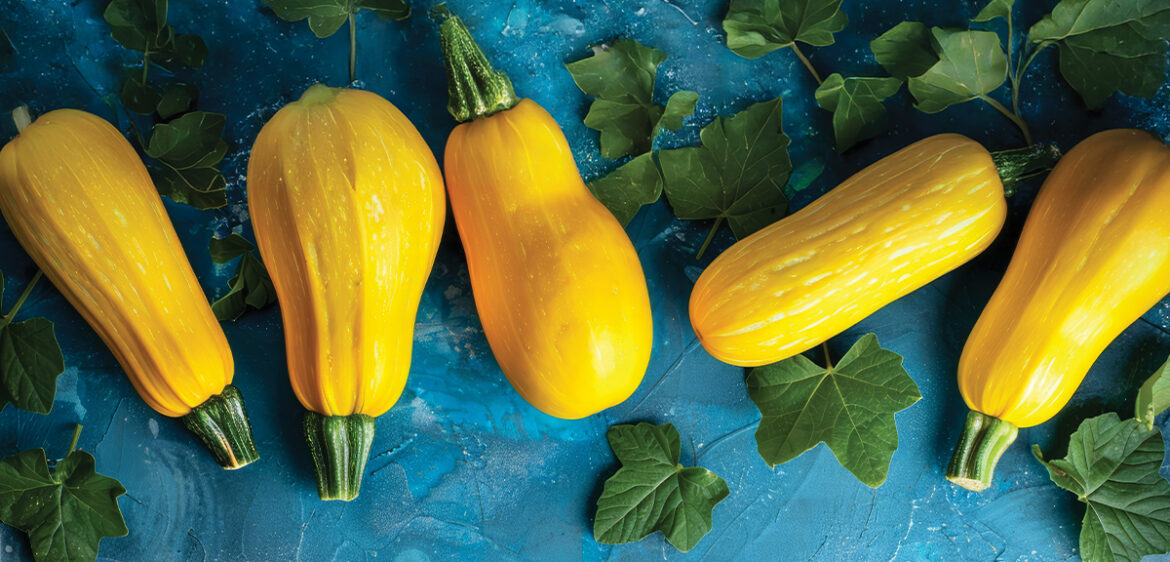
In September, you can find winter squash like butternut, acorn, and spaghetti, as well as late summer squash including straight neck, crookneck, bush scallop, patty pan, and zucchini.
Summer squash have a tender skin and are harvested at an immature stage, generally within 4 to six days after bloom. The plants grow like a bush, not a vine, and are suited for smaller gardens.
In South Mississippi, early September is the absolute tail-end of the window to plant fast-maturing summer squash varieties listed above. These must be planted in time to mature and harvest before the first frost which is usually mid-November.
Squash do well on black plastic mulch in spring, especially when planted early. They benefit from lack of weed competition and warm soil. Fall squash can be grown by planting seeds in August or early September. Be sure and remove all large and over mature squash for continuous production.
Varieties in Summer
- Aristocrat—hybrid zucchini; cylindrical fruit; smooth; uniform; dark green
- Bush Scallop—scalloped white to pale green fruit; 55 days.
- Butterbar—hybrid yellow straightneck; long, cylindrical; butter yellow; small seed cavity
- Medallion—hybrid; crookneck; lemon yellow
- Early Prolific Straightneck—popular old variety; creamy yellow; straight; slightly tapered
- Early Summer Crookneck—popular old variety; yellow; small, curved neck with bulbous blossom end
- Senator—hybrid zucchini; 6 to 7 inches long; medium green
- Sunburst—hybrid scallop; bright yellow with green at blossom and stem ends
Winter Squash
Winter hard-shelled squashes are grown for harvest in fall and storage through early winter months. Butternut and Acorn are the two most popular types of winter squash.
Most of these squashes have strong vining plants. The fruit range in size. Winter squash planted in spring along with summer squash mature in midsummer. They, however, lack the eating quality of those produced on plants from seeds planted in late June or early July along with Halloween pumpkins.
Because immature fruit is tasteless, you might want to delay harvest until the fruit rind is very hard and vines begin to die. Yellow acorn varieties are edible at all stages of maturity. All winter squash is pollinated by bees and require 60 to 70 days from pollination to maturity.
Varieties in Winter
- Vegetable Spaghetti—fruit 8 to 10 inches long, yellow when mature; cooked flesh is greenish-white, spaghetti-like strands; flavor is can be bland
- Sweet Mama—hybrid; dark green; 2 to 3 pounds; flattened; round; Buttercup type fruit; orange-ish flesh; stores well
- Waltham Butternut—large, tan fruit; 3 pounds; uniform shape; orange flesh; stores well
- Early Butternut Hybrid—mature fruit are tan in color; excellent flavor and texture; stores well
- Table Queen—acorn type; small fruit; green color; deeply-ridged; yellow flesh; bush type plant
Squash is great cooked alone or in a recipe. I provided a popular recipe below! Here’s hoping the fall weather is on the way in South Mississippi!
Squash Casserole
Ingredients
- 4 cups yellow squash, sliced
- 1 medium yellow onion, chopped
- 1/2 cup mayonnaise or sour cream
- 1 cup sharp cheddar cheese, shredded
- 2 large eggs, beaten
- 1/2 cup (1 stick) unsalted butter, melted and divided
- 1 sleeve Ritz crackers, crushed
- Salt and black pepper to taste
Instructions
- Preheat your oven to 350°F (or up to 375°F) and lightly grease a baking dish.
- Cook the sliced squash and chopped onion in a pot of boiling water or a skillet with a splash of water for 5 to 10 minutes until tender. Drain very well to remove excess liquid.
- Mix the beaten eggs, mayo or sour cream, half of the melted butter, salt, and pepper in a large bowl.
- Combine the drained squash, onions, and shredded cheddar cheese into the creamy egg mixture. Pour everything into the prepared baking dish.
- Top the casserole by spreading the crushed Ritz crackers evenly over the surface, then drizzle the remaining melted butter over the crackers.
- Bake for 25 to 30 minutes until the filling is set and bubbly and the cracker topping is golden brown.
Happy fall and happy gardening!
Gaye Winter, Ph.D., teaches English at Mississippi Gulf Coast Community College and is currently serving as Historian of the Biloxi Garden Club. Reach her at gaye.winter@mgccc.edu.