The Mississippi State Wildflower
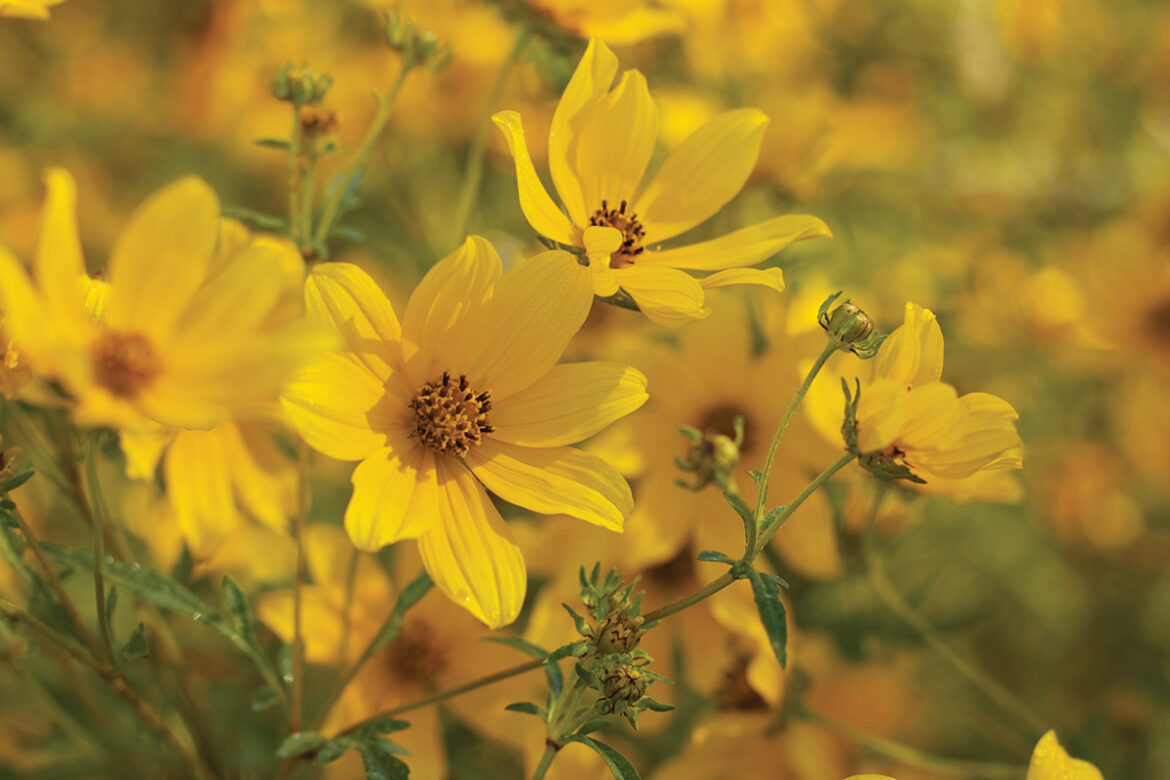
Everyone knows that the Mississippi state flower is the Magnolia, but did you know that we have a state wildflower as well? If you are interested in planting Mississippi’s state wildflower, Coreopsis, this coming spring, then this article is for you. To liven up winter time, let’s talk about this gorgeous plant also known tickseed.
While coreopsis has been recognized as a valuable plant for gardens and landscapes for centuries, its selection as the Mississippi state wildflower was not designated until 1991.
Mississippi recognizes that Coreopsis has had a widespread presence across our state; therefore, the state chose to include all 35 species as the state wildflower.
Coreopsis plants are very versatile as they come in a wide range of colors and patterns including pinks and yellows. The perennial plants are very popular with low maintenance. They are adaptable to hot, Mississippi summers. If it’s too hot, they may need some afternoon shade. But, do make sure they get 6 hours of direct sunlight each day. Also, Coreopsis is a great companion plant for ornamental grasses and other tough annuals and perennials.
Perennial coreopsis plants can be planted anytime from spring through early fall. Annual varieties should be seeded directly in the ground after the last spring frost. If you wish to start earlier, sow indoors 6 to 8 weeks before the last frost.
Annual varieties will start blooming in early summer and repeat bloom periodically through the fall, while perennial varieties will begin blooming the second year after planting from seed.
Plant coreopsis in well-drained soil. After they are in an established garden, coreopsis plants prefer to be left a little on the dry side.
Coreopsis attracts butterflies, beneficial insects, and birds. Hummingbirds are definitely attracted to these bright-colored wildflowers. Hummingbirds are also attracted to Coreopsis flowers because Coreopsis flowers are rich in nectar, making them an attractive food source. The blossoms can last a while. As the season progresses, leave a few flowers on the plants so birds can eat the seeds. Meticulous deadheading can help the plant to re-bloom.
Even though the Coreopsis can tolerate drought conditions, it likes temperatures ranging from 50 degrees nighttime to 80 degrees daytime. Coreopsis is a highly adaptable group of plants that are super easy to use in nearly all garden settings: Yarrow is a type that thrives without much attention—it gives gardens a natural look. This is a really great groundcover, too. If blooms are left to dry, the flowers will provide pretty winter clusters.
Creme Brulee is a creamy-colored coreopsis with a height of 18 inches tall and 24 inches wide. It thrives in Zones 5-9 and produces larger flowers along its stems, giving the plant a fuller appearance.
Pink Coreopsis has pink flowers and prefers more moisture than other varieties. Suited for Zones 3-8, try to divide the spreading clusters of plants yearly to keep them growing.
Moonbeam makes a beautiful perennial border. It creates a long season of pale-yellow daisies. It is a thread leaf variety and does well in Zones 4-9.
Veronica is a type of Coreopsis that can catch the eye with their blue or purplish flowers. A few can even be rosy pink or white. They like well-drained soil and full sun. Try to extend bloom time with regular deadheading as these flowers are worth it.
Limerock Ruby is a type that grows deep pink daisies on light-colored foliage. It is known as an annual but in Zones 7-9, it is a hardy perennial. The greenery resembles that of the thread leaf Coreopsis.
Limerock Dream produces a two-tone pink flower. It is usually grown as an annual but is hardy in Zones 6-9. It has feathery leaves that add to the beauty of the flowers. This variety requires well-drained soil over winter time.
Zagreb is a reliable variety that can grow 18 inches tall and bears brilliant gold daisy-like flowers on a fern type of foliage.
Wildflower Trails of Mississippi is a project of Keep Mississippi Beautiful. Mississippi is home to many beautiful native wildflowers, but these days, they can be tough to find. However, the Wildflower Trails of Mississippi Project is working to bring them back. They can be contacted at 601.853.4210 this spring for more information about how you can get wildflower seeds for a project. Visit them at www.mswildflowers.org.
I hope you are sipping your coffee to keep warm while you read this article and are contemplating adding our Mississippi wildflowers to your garden in the spring. Happy winter and happy gardening!
Gaye Winter, Ph.D., teaches English at Mississippi Gulf Coast Community College and is currently serving as President of the Biloxi Garden Club. Reach her at gaye.winter@mgccc.edu.