
Terrific, Radiant, and Humble
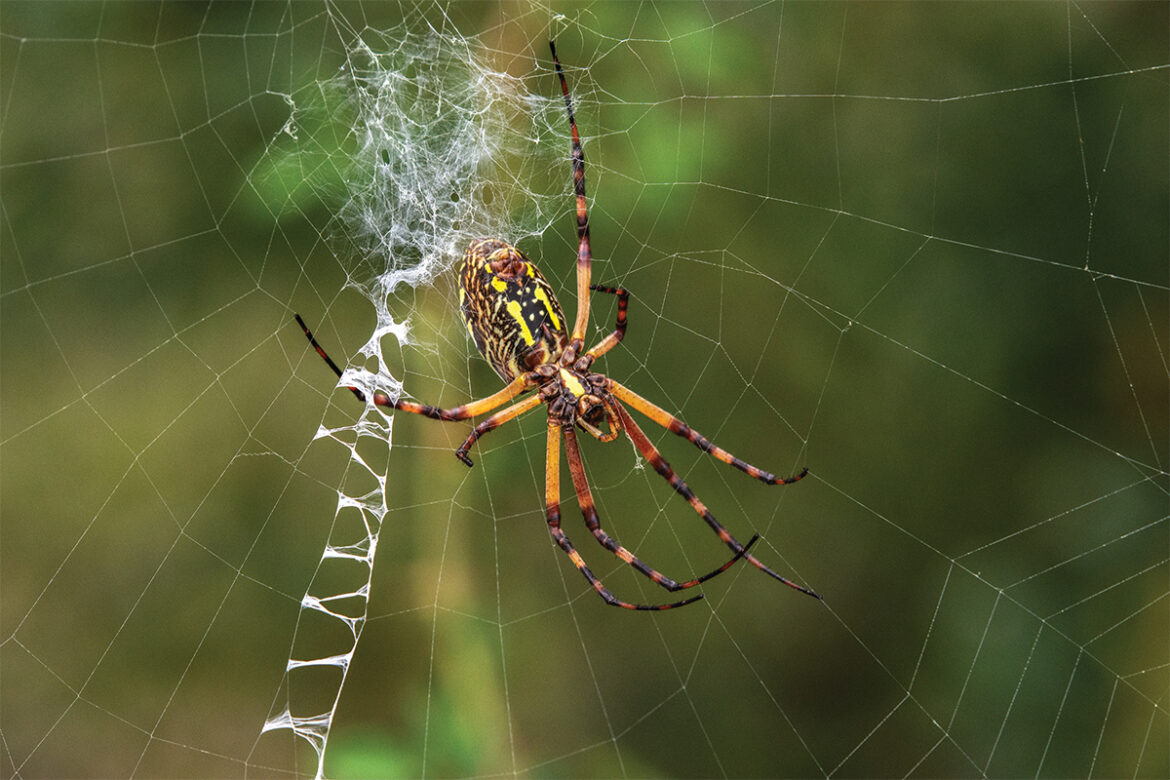
I have to tell you how excited I was when I began to write this article. I had a lovely black and yellow (yes, slightly venomous) spider build a web in my garden outside last fall. In my younger days, I admit, I probably would have gotten rid of the rather beautiful spider as soon as possible. But, more experienced gardeners have learned that everything works together in its mini ecosystem. So, I instructed all family members, including my chihuahuas, to leave the spider alone while I did my research, which consisted of hurriedly going to Google on my phone and looking up the information on the spider using a picture of her.
My hunch was right. This garden spider loves healthy gardens, so it made me proud to have her there in my garden. Also, this particular spider spins a zigzag right in the middle of the web so birds will see it and not get caught in the web. The zigzag is truly a miracle, and I looked forward to seeing it every day. Another plus for having this busy spider!
These spiders are exceptionally good for your garden because they eat bugs that are unhealthy for your plants and flowers. Yay, a new garden friend! Every day I would look for her and, yes, thank her for her duty of looking out for my garden. She became a kind of symbol representing life in that some things may not appear helpful or noticeable, but they are. And, just like people, you have to give them a chance.
As you can tell, we became rather attached to the spider. But, one morning, we walked outside and she was gone. Not only that, but her web was gone, too. We were sad, but I whipped out my cell phone and found out that this is normal, especially for females.
Reasons a Spider Might Leave
- End of life cycle: The spider may have died after laying eggs, which is a natural part of its life cycle, particularly after the first frost.
- Daily web rebuilding: Many garden orb weavers build a new web each night and tear down the old one at dawn, consuming the silk to conserve energy.
- Relocation: Spiders move for various reasons, including seeking a better hunting ground or a safer place to lay their egg sac, especially as the weather gets colder.
What To Look For
- A new web: Look for a new web in a nearby location. Spiders don’t always move far, so check nearby bushes, fences, or other structures.
- An “abandoned” web: If you see an incomplete or messy web, it might be an old one that the spider has left behind.
- An egg sac: In the fall, the spider may have moved to find a safe spot to create an egg sac and has since died. The egg sac will hatch in the spring, and the process will begin again.
Since I teach English, there is a little controversy about what type of spider influenced E.B. White when writing “Charlotte’s Web,” but Nora Peevy says this in her blog: “This week I came across a bunch of articles discussing the type of spider that inspired E. B. White. It is the harmless black and yellow garden spider, Argiope Aurantia. They are also known as the writing spider because they weave zigzag patterns into their webs, which resemble writing.
“Writing spiders are beneficial to the environment, so if you see one hanging out in your garden, please don’t disturb them. They eat mosquitos, moths, and other flying insects that are bad for your garden.”
With gardening, there’s so much to learn and always something new happening. You have to be careful not to overlook the small things, the helpers—they are gifts from God, really. Everything has a place. That’s why we garden.
Happy Gardening! May you find your Charlotte—a writing spider—“terrific, radiant, and humble.”
Author’s Note: I wrote this article in the fall. I have to tell you, as I was moving my plants back outside recently this spring (hopefully for the last time), I saw two rather odd ball-shaped attachments on my beautiful palm. Egg sacs! She left us a present. So, I cannot wait for them to hatch and perhaps another article will follow.
Gaye Winter, Ph.D., teaches English at Mississippi Gulf Coast Community College and is currently serving as Historian of the Biloxi Garden Club. Reach her at gaye.winter@mgccc.edu.