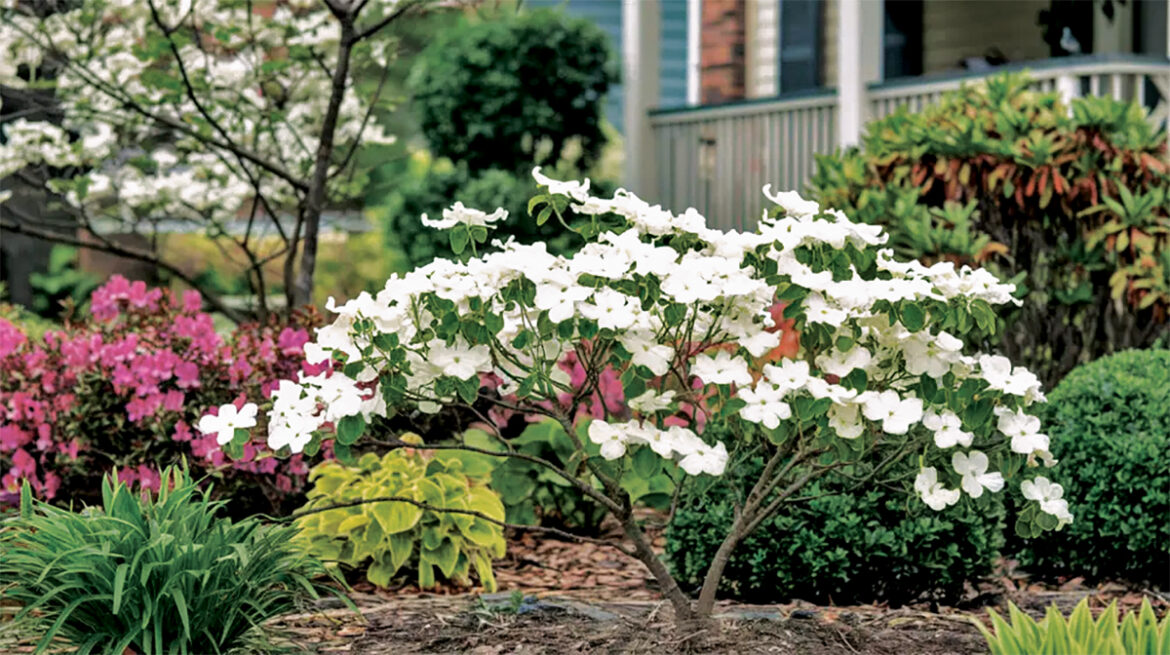
One of my favorite trees is the flowering dogwood. The flowers of the dogwood tree form a perfect cross, which is why they have become associated with Easter as a tree of renewal and beginnings. Flowering dogwoods at Easter time are truly elegant and beautiful trees for Southern landscapes.
Dogwoods are among the first trees and shrubs to bloom in Mississippi each spring. In the south, the flowering dogwood is a beauty. As dogwoods signal spring, they can make an impact in your yard all year long with the white or pink flowers, and their autumn foliage can really shine in outstanding colors: yellows, oranges, and reds. They also produce delightful berries that turn bright red about the same time as the leaves change. Dogwoods are a valuable food source for all types of wildlife in Mississippi. Birds, mammals, and insects will all eat various parts of dogwood trees.
Even in the wintertime, dogwoods showcase gorgeous flower buds that look like onion-shaped domes. The buds will remain on the bare branches waiting for warmer temperatures so they can start blooming.
You can plant dogwoods in the spring in South Mississippi when the ground has thawed or when planting in containers. This means planting dogwoods in early spring before new growth begins. Container-grown trees offer more flexibility, but you should still avoid planting in frozen or extremely wet soil. Even though dogwoods tend to thrive near riverbanks or streams, they can struggle in flooded areas where the soil in constantly saturated.
Dogwood blooms need at least a half-day of sun. For the heaviest bloom, plant it in full sun. Dogwoods can grow in full sun though they may appreciate light afternoon shade in hotter climates.
Dodwoods for the South
- Cherokee Princess
This variety is noted for its early blooming and purplish-red fall foliage. This type is a
cultivar with large, white, showy bracts that are bigger than the standard species. - Appalachian Spring
This variety was discovered at the Camp David Presidential Retreat and features white bracts and intense red autumn color. It also has a strong resistance to fungal disease. - Cloud 9
This variety is known for being cold-hardy resistant and having an abundance of stunning white blooms. - Pluribracteata
This variety has a ruffled appearance due
to doubled white bracts (6-8 instead of the usual 4). It grows from a shrub into a small, multi-stemmed tree. - Bunchberry
This variety has white flower bracts and red, edible berries. It is a low -growing groundcover that can turn your garden into a masterpiece. - Pagoda Dogwood
This variety produces clusters of white flowers followed by blue-black berries. This dogwood boasts a horizontally tiered branching pattern, which gives it a pagoda-like appearance, hence the name. - Welch’s Junior Miss
This variety is a fine pink- flowered selection of Deep South; therefore, it is the best pink for the warmer zones. It was a selection from the late ‘Chick’ Welch of Mobile, Alabama. - Cornus Florida
This flowering dogwood is renowned for its beauty. This shrub or small tree has a canopy with star like blooms in spring and transforms to a green, luscious canopy in summer. In autumn, it produces scarlet and purple foliage that is stunning. Wintertime brings a light gray bark making it a must have for any garden. - Red Osier Dogwood/Silky Dogwood
These varieties are tolerant of moist soil and grow well in shrub borders or under deciduous trees. Silky dogwoods are native to North America and are known for their value to wildlife. - Gray Dogwood
This variety forms thick walls of shrubbery covered in flowers, tiny white berries, and brightly colored stems. It can grow in a wide range of soil types making it a good choice for beginning gardeners.
Dogwoods will occasionally self-seed in the garden sending out seedlings that you can transplant to a location of your choice. Flowering dogwoods are winter-hardy and don’t need special protection in the South.
When it comes to plants and diseases, healthy dogwoods have fewer problems, but stressed trees can be affected by pests and fungal diseases. You can always go to your nearest nursery and ask about disease-resistant cultivars that are available, and gardeners can look for these when choosing new dogwoods.
Dogwood pruning is usually optional as the trees have a natural shape. You can remove damaged wood anytime and in fall or winter you might want to trim branches and check for pests.
Dogwoods have what appear to be large, four-petaled white flowers that are actually bracts— modified leaves. These frame a tight cluster of tiny, yellow-green true flowers in the center. The bracts are often pure white, but some trees may blush ever so slightly with soft pink tinges near the tips.
Since dogwoods bloom in early spring, usually before the leaves emerge, it makes the blossoms even more striking against the bare branches and forest floor.
The flowers start out a soft, chartreuse green and slowly mature to a dazzling white, giving the shrub an evolving display of color and texture as the season progresses. When in full bloom, the branches arch slightly under the weight of the blossoms creating a cascading effect that’s nothing short of breathtaking.
There’s something timeless and graceful about white flowers in the landscape. They light up shady corners, provide contrast against darker foliage, and bring a sense of peace and calm to a setting. I am hoping you decide to add dogwoods to your landscape and enjoy their statuesque beauty.
HAPPY EASTER & HAPPY GARDENING!
Gaye Winter, Ph.D., teaches English at Mississippi Gulf Coast Community College and is currently serving as President of the Biloxi Garden Club. Reach her at gaye.winter@mgccc.edu.