How One Coast Mom Is Turning Waiting Lists Into Action
When Alyece Smith’s son Caiden was diagnosed with autism spectrum disorder in 2018, she didn’t panic. She researched. She called. She filled out paperwork. And then she waited.
And waited.
There were long lists for services. Limited options. Some providers were fresh out of school, learning alongside the very families they were treating. Parents searched Facebook groups late at night, hoping someone knew someone who could help.
Love was never the issue. Access was. “I knew back then it was just a challenge even to get services and find other parents who could relate,” Smith said.
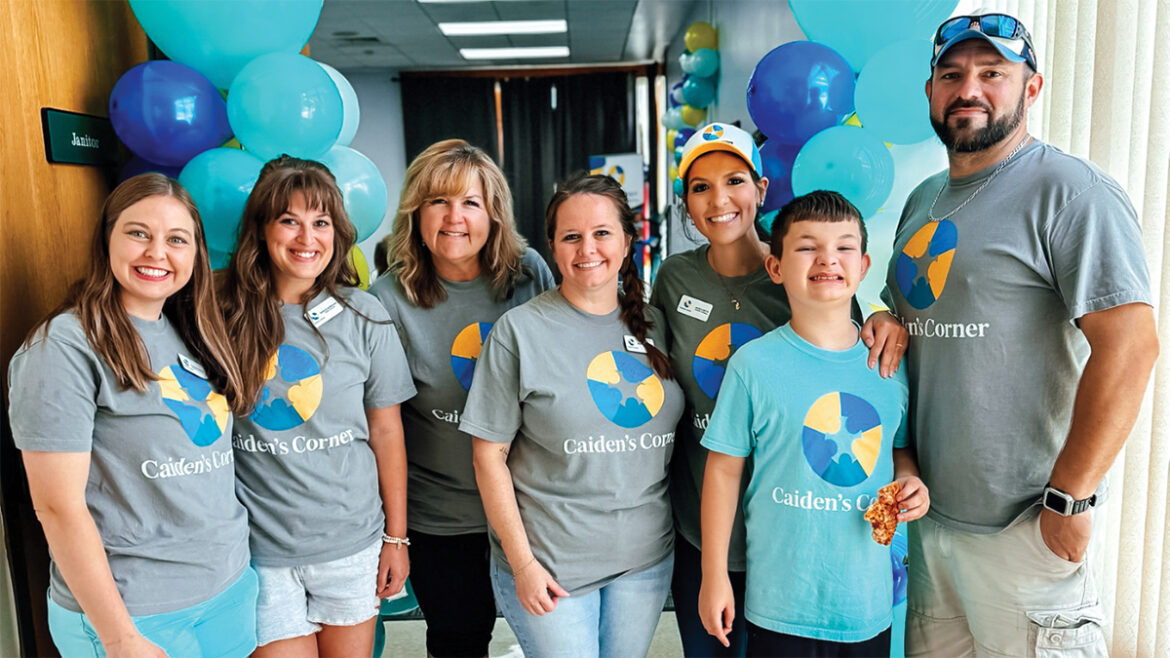
What began as advocacy for her own child slowly became something bigger. In 2024, she officially launched Caiden’s Corner—a nonprofit dedicated to supporting children on the autism spectrum and the families raising them. Her goal was simple—help parents now, not six months from now.
Through educational workshops, virtual trainings, and community partnerships, Smith equips families with practical tools they can use at home while they wait for formal services. She has partnered with Hancock County Youth Court to create calming spaces for children with sensory needs. She worked with Hope Haven to help establish a sensory-friendly area for children undergoing forensic interviews. She’s collaborated with CASA of South Mississippi to provide “Kindness Kits” filled with sensory tools for advocates working with vulnerable children—and trained those advocates to understand sensory overload and meltdowns better.
In just months, the foundation has reached hundreds of families, both locally and beyond South Mississippi. But perhaps her most ambitious project yet started with a familiar scene.
As a mother of multiple children, Smith often found herself skipping community festivals and public events because they were too overwhelming for Caiden. Loud music, crowded spaces, and unpredictable noise can quickly become distressing for children with sensory sensitivities. That meant her other children sometimes missed out, too.
So, she asked a different question: What if families didn’t have to leave?
And now, a 24-foot enclosed trailer will soon become Mississippi’s first mobile sensory unit. Once complete, the trailer will function as a calming, regulation-friendly space that can travel to festivals, school events, and community gatherings. Families will be able to step inside, reset, and return—without packing up and going home.
“It’s really about inclusion,” Smith said. “So families don’t have to avoid those events or leave early.”
The project is being built through donated materials and in-kind services, set for an unveiling during the foundation’s Autism Acceptance Walk on April 11 at the Bay St. Louis Train Depot. The event runs from 8 a.m. to 4 p.m., with the walk beginning at 11 a.m. Teams can register in honor of a loved one on the spectrum, and the day will include vendors, sensory play stations, therapy dogs, and community resources.
For Smith, the walk isn’t just a fundraiser. It’s a reminder that families navigating autism are not alone.
She can’t shorten every waiting list. She can’t instantly expand every therapy center. But she can build spaces where children feel safe, parents feel supported, and siblings don’t have to miss out.
And sometimes, for a family who just needs a place to take a breath, that’s everything.